

Reviewed · TICKETS
Entrance Ticket to World of Seashells museum
Shells tell bigger stories than you expect. At the World of Seashells museum in Chamarel, you can see 8,000 specimens from around the world and learn how they form, protect living creatures, and shape human traditions. I like the museum’s wide scope, from natural science to myths and mathematics, and I also like the low $7 admission price, which makes it easy to add to a day in southern Mauritius.
The main drawback is that the experience depends on your interest in displays and written information. If you have a short attention span, several thousand carefully arranged shells may feel like a lot. Opening-hour reliability is another reason to avoid arriving at the last minute, especially in the afternoon.
In This Review
- Key points to know before you go
- What you see inside the 8,000-shell collection
- Why the shell theorem adds more than decoration
- Shells in myths, trade, and daily life
- Is the museum good for children?
- How much time should you allow?
- The $7 price and overall value
- Getting there and practical planning
- Who will enjoy this museum most?
- Should you book the World of Seashells Museum?
- FAQ
- Where is the World of Seashells museum?
- How many seashells are displayed?
- How long does a visit take?
- What is included in the admission?
- Is the museum suitable for children?
- Can I cancel for a refund?
Key points to know before you go
- 8,000 shells from around the world: The museum presents the largest seashell collection in Africa, with specimens in many shapes, sizes, colors, and patterns.
- More than a display of pretty objects: You learn about shell structure, living mechanisms, defense systems, and the role shells play in the environment.
- Science, culture, myths, and mathematics: The visit links shells with human customs, legends about the origin of life, and the spiral curves explained by the shell theorem.
- A useful family stop: Children can enjoy the visual variety, while older visitors can spend more time with the explanations.
- Allow 45 minutes to 90 minutes: Some people may move through in 20 to 30 minutes, but a slower visit gives the information time to sink in.
- Plan your arrival carefully: The listed start time is 9:00 am, and one afternoon visitor found the doors closed before the stated last entry time.
What you see inside the 8,000-shell collection
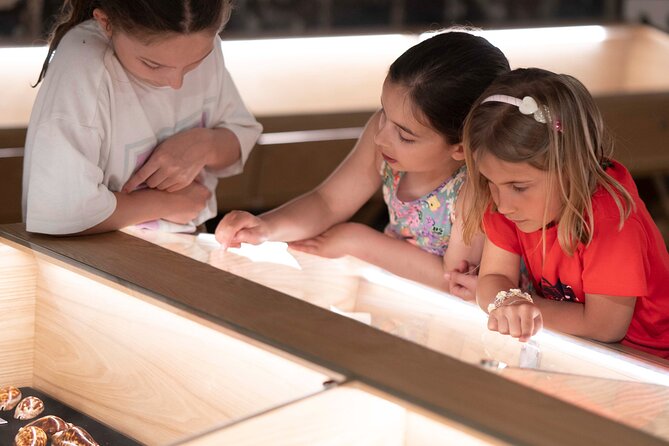
The World of Seashells is not simply a room filled with souvenirs from the beach. Its central appeal is variety. You see shells from different parts of the world arranged to show their changing forms, colors, and patterns. Even if you already enjoy collecting shells, the number of examples gives you a fresh sense of how much life exists in the sea.
I like that the displays are meant to answer basic questions. Why does a shell have a spiral? How does the animal inside use it? What protects it from danger? What makes one shell smooth and another ridged, pointed, or heavily patterned?
The museum explains shell morphology, meaning the form and structure of shells. You also learn about the living mechanisms behind them and the defense systems that help protect the creatures that make them. That turns the visit from a simple visual display into a small natural science lesson.
The arrangement matters. Several thousand shells could easily become a blur, but the collection is presented with descriptions and categories that help you compare one specimen with another. A lifelong shell collector could spend much longer here than someone making a quick stop, but both can get something from the display.
The shells are also a reminder that beauty in nature often has a job to do. Curves, ridges, thickness, and color are not just decoration. The museum gives you a way to connect those features with survival.
More of Chamarel:
- Mauritius: Private Southwest Chamarel Highlights Tour
★ 4.8 · 1,427 reviews - Mauritius: Private South Tour with Pickup
★ 4.9 · 940 reviews - Full-Day Catamaran Cruise to Île aux Cerfs with BBQ Lunch
★ 4.5 · 455 reviews
Why the shell theorem adds more than decoration
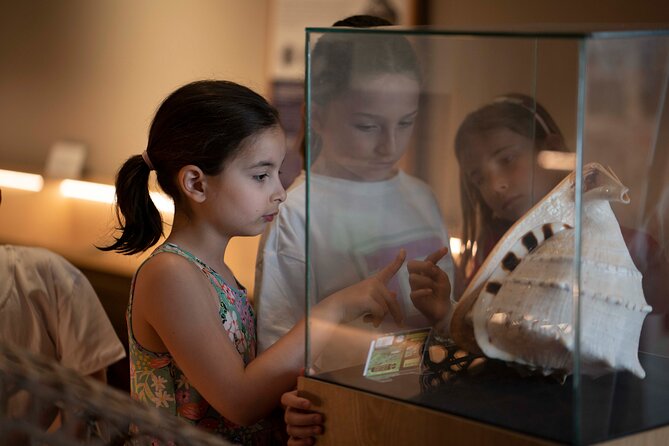
One of the more unusual parts of the visit is the explanation of the shell theorem. You do not need to be a mathematician to appreciate the idea. The museum uses the shell’s spiral form to show how mathematics helps explain the precise curves found in nature.
That connection gives the museum extra depth. You may arrive expecting rows of attractive shells, then find yourself thinking about geometry and natural design. The spiral is familiar, but seeing it explained as a mathematical form makes it easier to look at shells with fresh eyes.
This section may appeal most to older children, students, or anyone who enjoys seeing science connected to ordinary objects. It also helps break up the display so the museum is not only about color and shape.
Still, this is a museum visit rather than a hands-on science center. The information is presented for you to read and consider. If you want moving demonstrations or practical experiments, this may feel quiet. If you enjoy learning at your own pace, the calm format works well.
Shells in myths, trade, and daily life
The museum also looks beyond biology. Shells have been used by people throughout the world for centuries, and the displays explain some of those uses. That cultural angle gives the collection a human side.
You learn about myths and legends in which the shell is linked to the origin of life. The details vary across cultures, but the shared theme is striking: the shell can represent beginnings, birth, and the sea as a source of life.
This material helps you see shells as more than natural objects. They have served as symbols, decorative items, tools, and valuable objects in different societies. The museum does not limit the story to Mauritius, instead connecting the collection to traditions from around the world.
I find this especially useful if you are visiting with someone who is less interested in marine biology. One person can focus on the shapes and colors, while another reads about how people have understood and used shells over time.
The cultural information also gives the museum a wider purpose. You are not just asking which shell is the prettiest. You are considering how a simple object can carry practical, spiritual, and social meaning.
Is the museum good for children?
The visual appeal is obvious for children. Shells come in surprising forms, and the large number of specimens gives young visitors plenty to point out and compare. The museum specifically includes material intended to interest kids, making it a sensible stop for families exploring Chamarel.
The best approach is to keep the visit flexible. A child may enjoy the colors and unusual shapes but lose interest in long explanations. You can focus first on the most striking displays, then return to the information that suits your child’s age.
Older children may get more from the sections about defense systems, living mechanisms, and spirals. The subject also offers easy questions to discuss together: Why might a shell be thick? What could a ridge do? Why do so many shells form curves?
Do not expect a large attraction built around rides or active play. This is a museum where you look, read, and compare. For that reason, it works best as one stop in a wider day rather than the sole activity for a family.
Its short-to-moderate length helps. A quick visit may take 20 to 30 minutes, while a fuller visit can last from 45 minutes to an hour and a half. You can choose the pace that matches your group.
More museums in Chamarel:
- North Day Tour, Botanical Garden, Sugar Museum, Rum Tasting
★ 5.0 · 3 reviews
How much time should you allow?

The official estimated duration is about 45 minutes to 1 hour and 30 minutes. That is a sensible planning range if you want to read the information and take your time with the displays.
Some visitors may finish in 20 to 30 minutes. That does not necessarily mean the museum lacks material. It simply reflects the difference between a quick look and a detailed visit. If you are already visiting nearby and have a spare half hour, the museum can still work.
I would allow at least 45 minutes if you want the experience to feel worthwhile. Give yourself closer to 90 minutes if you are traveling with children, have a strong interest in shells, or enjoy reading about science and culture.
The listed start time is 9:00 am. Since the supplied information does not give a full daily schedule, check the current opening details before setting out. Do not build your plan around arriving just before closing.
One visitor reported reaching the entrance at 2:40 pm on a Sunday, despite a stated final entry time of 3:00 pm, and finding the doors closed. That is a serious practical warning. It may have been an isolated staffing problem, but arriving earlier in the day is the safer choice.
The $7 price and overall value
At $7 per person, this is an inexpensive attraction by Mauritius sightseeing standards. The price is low enough that you do not need to love shells to justify a visit, particularly if you are already spending time in Chamarel.
The value comes from the amount of material and the range of subjects. You are not paying only to see a display of shells. You are also getting explanations about biology, ecology, human use, mythology, and mathematical form.
The museum is most valuable for people who take time to read. A quick walk past the cases will show you beautiful objects, but the written material supplies the meaning. If you treat it as a 20-minute photo stop, the price is still modest, though the experience may feel thinner.
I would consider it a good-value add-on for families, shell collectors, and anyone building a southern Mauritius day around Chamarel. It is less essential for someone who wants a major historical site, a large interactive attraction, or a long guided excursion.
The collection’s scale also helps justify the admission. Seeing 8,000 shells from many parts of the world gives the visit a clear purpose. You are not looking at a handful of common beach finds.
Getting there and practical planning
The museum is in Chamarel, and the information provided places it near public transportation. Service animals are allowed, and most people can take part. The ticket is mobile, so you can keep the admission details on your phone rather than needing a printed voucher.
No group-size information is provided, so you should not assume this is a private or guided tour. The experience is presented as an admission visit, which gives you freedom to move at your own pace.
Because the museum is a relatively short stop, it can fit neatly into a larger outing in southern Mauritius. You might use it as a cultural and educational break between other area sights. The exact order depends on your transport and the day’s conditions.
The weather policy matters. The experience requires good weather, and a cancellation caused by poor weather offers either another date or a full refund. If the museum is part of a tightly planned day, leave some flexibility in your schedule.
You can cancel for a full refund up to 24 hours before the experience start time. Changes or cancellations made less than 24 hours before the start are not accepted for a refund, and the cut-off follows local time.
Who will enjoy this museum most?
I would recommend it most strongly to:
- Families looking for an educational stop that does not take all day
- Shell collectors and people who enjoy marine life
- Visitors who like museums built around close observation
- Anyone interested in how nature connects with culture and mathematics
- Visitors already spending time in Chamarel who want a low-cost extra activity
You may want to skip it if you dislike display-based museums or rarely read exhibit information. Several thousand shells can feel repetitive if you are not curious about their differences.
The museum also rewards patience more than speed. You can walk through quickly, but the better experience comes from noticing how shell structure connects with protection, growth, human use, and symbolism.
Should you book the World of Seashells Museum?
Book it if you want a compact, affordable stop with real educational value. The 8,000-shell collection, worldwide scope, and mix of science, culture, and mathematics make it more interesting than a simple shell exhibit.
I would especially include it in a family day around Chamarel or recommend it to anyone who enjoys natural history. At $7, the risk is small, and the museum can fill 45 minutes to 90 minutes without taking over your schedule.
Arrive early rather than testing the final entry time. If you prefer interactive attractions or have no interest in shells, you may find the displays slow. For the right visitor, though, this is a thoughtful little museum where a familiar beach object becomes surprisingly complex.
FAQ
Where is the World of Seashells museum?
The museum is located in Chamarel, Mauritius.
How many seashells are displayed?
The museum presents 8,000 seashells from around the world and is described as having the largest seashell collection in Africa.
How long does a visit take?
The approximate visit duration is 45 minutes to 1 hour and 30 minutes. Some people may complete it in about 20 to 30 minutes.
What is included in the admission?
Admission to the World of Seashells museum is included with the ticket.
Is the museum suitable for children?
Yes. The experience is specifically described as appealing to kids, and most people can participate.
Can I cancel for a refund?
You can cancel at least 24 hours before the experience start time for a full refund. Cancellations or changes made less than 24 hours before the start are not accepted for a refund. If poor weather causes the experience to be canceled, you will be offered another date or a full refund.
Just added in Chamarel
- Visit south of Mauritius★ 5.0 · 1 review
- Ebony Forest Reserve Chamarel: Sublime Sundowner★ 4.5 · 9 reviews
- Full day visit to Chamarel ,Curious Corner & Takamaka with Lunch★ 4.5 · 5 reviews
- The Gorgeous South of Mauritius: Full-day tour incl Tea Factory & Crocodile park★ 4.0 · 10 reviews
- Taxi Mauritius Airport Transfers★ 5.0 · 11 reviews
- Food Tasting & Market Shopping: Private Guided Tour in PORT LOUIS★ 4.5 · 9 reviews
- All inclusive SPEEDBOAT FULL DAY to ILE AUX CERF & GRSE WATERFALL★ 4.0 · 12 reviews
- Fascinating Nature Tour Incl Ebony Forest, 7 Coloured Earth,Lunch★ 5.0 · 3 reviews
Tickets, compared.

Ticket to the largest Oceanarium of the Mascarene Islands
Read our review →
Casela Nature Parks Entrance Ticket with Transfer
Read our review →
Private Full Day Tour with Entry Tickets & Lunch
Read our review →
Browse the lists this tour appears in