

Reviewed · CHAMAREL TOURS
Ebony Forest Reserve Chamarel: Endemic Birdwatching Guided Tour
Rare birds reward patient eyes. This four-hour Ebony Forest tour gives you a real chance to see Mauritius’s pink pigeon and echo parakeet in their native forest, not behind glass. I like the nine-person maximum, which keeps the group small enough for quiet birdwatching, and I like that binoculars, drinks, and snacks are included. The main consideration is simple: wild birds do not follow a timetable.
You meet at Ebony Forest Reserve Chamarel at 9:00 a.m. and spend about three to four hours with a guide in an important bird area. The route may cover roughly 6 kilometers, with walking, a possible safari jeep ride, steep boardwalks, and rest points. You need moderate fitness, and the best payoff comes to people willing to walk slowly and keep looking.
In This Review
- Key points at a glance
- Why Ebony Forest is special for birdwatching
- Starting with the museum and release aviaries
- Walking the forest with binoculars
- Boardwalks, canopy views, and rest points
- Flycatcher Raised Walkway and Sublime Point
- How much walking should you expect?
- Small-group value at $60.58
- Morning timing and practical planning
- The best way to approach the bird sightings
- Who should book this Ebony Forest tour?
- Should you book it?
- FAQ
- How long does the Ebony Forest birdwatching tour last?
- What time does the tour start?
- Where does the tour meet and finish?
- What birds might I see?
- Are binoculars provided?
- Are food and drinks included?
- How many people can join the tour?
- Can I cancel for a full refund?
Key points at a glance

- Six endemic bird species in one protected forest: You may look for the pink pigeon, echo parakeet, Mauritius paradise flycatcher, Mauritius black bulbul, Mauritius kestrel, and grey-white eye.
- A small group of nine people maximum: This matters when the guide is helping everyone scan the trees and listen for calls.
- Binoculars are provided: You do not need to bring your own pair, though you should bring a camera if you want photographs.
- A 6-kilometer walk may be part of the morning: One useful tip is to walk both ways instead of taking the jeep for every section.
- Bird release aviaries and a museum begin the visit: You get context before heading into the forest.
- Sublime Point adds scenery and Mauritian snacks: The stop looks across the rugged south and gives you a welcome rest.
Why Ebony Forest is special for birdwatching
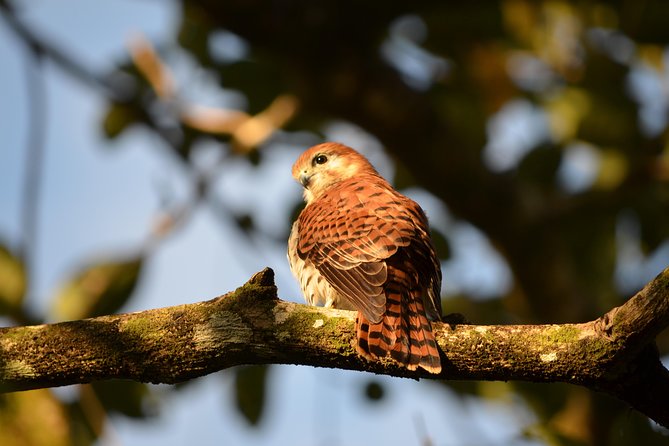
Mauritius is famous for beaches and volcanic scenery, but its native birds tell a harder story. Several species found here are rare and exist nowhere else in the world. Ebony Forest Reserve Chamarel protects native woodland and works to restore areas that had been reduced or altered over time.
That conservation work gives this tour more weight than a standard nature walk. You are not simply ticking off birds. You are seeing a place where forest restoration and species protection are active parts of the visit.
The reserve is listed as an Important Bird Area by BirdLife International. Six of the nine remaining endemic birds of Mauritius can be found here. That does not mean you will see all six in four hours. It means the reserve offers one of the strongest settings on the island for trying.
The two headline species are the pink pigeon and the echo parakeet. Both are rare, and both can be difficult to spot in thick forest. A patient guide improves your odds by showing you where to search, how to use the binoculars, and how to notice movement, shape, and feeding behavior rather than waiting for a bird to pose in plain view.
More of Chamarel:
- Mauritius: Private Southwest Chamarel Highlights Tour
★ 4.8 · 1,427 reviews - Mauritius: Private South Tour with Pickup
★ 4.9 · 940 reviews - Full-Day Catamaran Cruise to Île aux Cerfs with BBQ Lunch
★ 4.5 · 455 reviews
Starting with the museum and release aviaries
The morning begins at the Ebony Forest Reserve meeting point in Chamarel. The first stage includes a short museum visit, which helps explain the forest and the birds before you set off.
This is a useful beginning, especially if you are new to birdwatching. You learn what to look for before the trees, leaves, and distance make identification harder. The information also gives the walk a clear purpose, since you can connect the birds you hope to see with the reserve’s work to protect them.
You also get an exclusive visit to the bird release aviaries. This is a chance to spot the echo parakeet and pink pigeon before searching for wild birds. It is important to keep the distinction clear: the aviaries can help you become familiar with the species, but the real goal is to find them active and feeding in the forest.
For some people, the aviary visit may feel like the easiest part of the morning because the birds are more visible there. For others, it provides a helpful lesson in appearance and behavior. Use it as preparation, not as a substitute for the wild encounter.
Walking the forest with binoculars
After the introduction, your guide takes you into the forest with provided binoculars. The tour lasts around three to four hours, and one account of the route covered about 6 kilometers. That makes this more than a quick stroll from a parking area.
The walking pace should suit birdwatching. You may stop often, scan branches, and wait for movement. The guide helps you find birds instead of simply naming them after they fly away. This is where the small group becomes valuable. With no more than nine people, the guide has a better chance of pointing out a distant bird before it disappears.
You will look and listen for the pink pigeon and echo parakeet, along with the Mauritius paradise flycatcher, Mauritius black bulbul, Mauritius kestrel, and grey-white eye. The tour description refers to six endemic species in the reserve, while a participant managed to see five out of seven species during a 6-kilometer walk. Treat that as an encouraging result, not a promise.
The most important birdwatching tip is to slow down. You may see only a few species, or you may have a very productive morning. The guide’s skill helps, but weather, bird activity, and plain luck still control the final count.
The forest also gives you more than birds. Your guide may point out plants and butterflies as you walk. That makes the tour worthwhile even during quiet stretches, when no rare bird is showing itself.
Boardwalks, canopy views, and rest points
A raised walkway reaches high into the forest canopy. This changes the view from a ground-level woodland walk to a chance to look through the upper parts of the trees, where birds may feed or move between branches.
The boardwalk is one of the most memorable parts of the route, but it also helps explain the fitness requirement. You should be comfortable with a moderate walk and some elevated sections. The tour is not presented as a strenuous expedition, yet the distance and uneven natural setting require more effort than a short sightseeing stop.
Small resting points along the route make a difference. They give you time to catch your breath, drink something, and keep scanning instead of rushing from one location to the next. The supplied snacks and drink are practical here. You do not need to carry food for the morning, though you should still plan your clothing and personal water needs sensibly.
One participant advised walking both ways instead of taking the jeep. I think that is good advice if you are fit enough and your main aim is birdwatching. Walking gives you more time in the forest and more chances to notice a bird, butterfly, or plant. The safari jeep can make sense if you want to save energy or reduce the walking distance.
A completely different kind of day out:
- Mauritius: Ile Aux Cerfs Catamaran Trip w/ Lunch & Transfer
★ 4.3 · 1,922 reviews - Mauritius: Full-Day Catamaran Cruise to the Northern Isles
★ 4.7 · 1,798 reviews - Île aux Bénitiers: Snorkeling w/Dolphins Boat Tour & Lunch
★ 4.0 · 1,635 reviews - Mauritius: Private South-West Nature & Viewpoints with Lunch
★ 4.8 · 1,129 reviews
Flycatcher Raised Walkway and Sublime Point
The route includes the Flycatcher Raised Walkway, a section designed to bring you into the forest canopy and help with bird observation. The name points to the Mauritius paradise flycatcher, one of the endemic species you may hope to find.
This is the sort of place where patience matters. A raised walkway does not guarantee a close view, but it can put you at a better height for scanning the trees. Keep your binoculars ready and listen carefully to the guide rather than focusing only on the largest branches.
The next major stop is Sublime Point. Here, you can enjoy Mauritian treats while your guide explains the mountains and rugged scenery of the wild south. This pause gives the morning a useful change of pace. You move from close forest observation to a broad view of the island’s terrain.
Sublime Point is also a good reason to bring a camera. A camera is not included, so pack your own if you want photographs of the views or birds. Do not let photography take over the walk, though. A long lens may capture a bird, but binoculars will usually be more useful for quick sightings.
How much walking should you expect?
Plan for approximately four hours, with a possible route of about 6 kilometers. The exact balance between walking and safari jeep transport may vary, but the experience is clearly designed for people who want an active morning in the forest.
You should have a moderate level of physical fitness. That means you need to manage a several-hour outing with walking, elevated boardwalks, and periods of standing while looking into the trees.
The tour may not suit you if you want a short, easy nature stop with guaranteed wildlife sightings. It is a better fit if you enjoy walking at a steady pace and accept that birdwatching involves quiet pauses and missed chances.
At the same time, you do not need to be an expert birdwatcher. The guide provides the binoculars and teaches you how to search. The museum and aviary visit also give beginners a useful starting point.
Small-group value at $60.58
At $60.58 per person, this is not the cheapest way to spend a morning in Mauritius. The value depends on what you want from the outing.
You are paying for a guided experience in a protected forest, a group limited to nine people, binocular use, snacks and a drink, access to the museum and release aviaries, and a route that includes specialist birdwatching areas. You also get help identifying birds that would be easy to miss on your own.
The small group is particularly important. Birdwatching works badly when a large crowd talks, spreads out, or blocks the guide’s view. Nine people is still a group, but it is small enough for the guide to give individual help.
The price makes the most sense if you care about Mauritius’s endemic wildlife and want more than general sightseeing. If you only want dramatic views, the forest walk may feel like more time and money than necessary. If the pink pigeon, echo parakeet, or Mauritius paradise flycatcher is high on your wish list, the specialist setting adds real value.
This activity is commonly booked about 22 days ahead, so it is sensible to reserve early if your dates are fixed. Confirmation is sent within 48 hours, subject to availability, and at least two adults are required for the activity to operate.
Morning timing and practical planning
Tours begin in the morning, with a stated start time of 9:00 a.m. Morning timing suits birdwatching because it gives you a focused block of time before the day moves on to other plans.
The meeting point is Ebony Forest Reserve Chamarel, Chamarel MU, 90409, Mauritius. The tour ends back at the same meeting point. Public transportation is nearby, according to the supplied information, but no hotel pickup is included in the tour details, so plan your own arrival.
Bring comfortable walking clothes and shoes suitable for a forest route and raised walkways. You receive binoculars, snacks, and a drink. You do not receive a camera, so bring your own if photography matters to you.
Because the activity depends on good weather, a poor-weather cancellation is possible. In that case, you are offered another date or a full refund. For a normal cancellation, you receive a full refund if you cancel at least 24 hours before the start time. Changes or cancellations inside that 24-hour window are not accepted.
The best way to approach the bird sightings
Do not judge the tour only by the number of species you see. Five endemic species in a four-hour walk would be an excellent result, but seeing one or two can still be normal for a wild bird outing.
Instead, pay attention to how the guide searches. You may learn to scan the edges of leaves, watch feeding areas, and recognize a bird by movement before you see its full body. That skill is part of the experience and can make later birdwatching on Mauritius more rewarding.
Keep your group quiet when the guide signals a possible sighting. Ask questions during pauses, and use the resting points to review what you have already seen. The supplied binoculars are another reason to avoid rushing. A quick glance may show a shape, while a steady view can reveal color and behavior.
The forest restoration work also deserves your attention. You can see how the reserve is trying to recreate native forest over larger areas. This gives the tour a conservation message that is practical rather than abstract: healthy forest gives rare birds somewhere to live.
Who should book this Ebony Forest tour?
I would recommend it to you if you enjoy nature, have moderate fitness, and want a serious chance to see endemic Mauritian birds. It is particularly suitable for birdwatchers, photographers, couples, and families with older children who can walk quietly for several hours.
Beginners should feel welcome because binoculars and instruction are provided. You do not need to know the difference between the six target species before arriving.
I would be more cautious if you have limited mobility, dislike walking, or need guaranteed sightings. The tour requires a minimum of two adults, depends on weather, and takes place in a living forest where wildlife may remain out of sight.
The experience has a 4.9 rating from 39 ratings and a 97 percent recommendation rate. Those figures suggest a strong level of satisfaction, especially for a specialized activity, but they do not change the basic rule of birdwatching: the forest decides what appears.
Should you book it?
Book this tour if you want Mauritius beyond the beaches and are willing to trade certainty for a genuine wildlife search. The combination of a nine-person group, provided binoculars, conservation access, canopy walkways, and the Sublime Point stop makes $60.58 reasonable for a focused half-day.
My strongest practical tip is to walk both ways if your fitness allows. You will spend more time in the habitat, and every extra quiet minute can help. Choose the safari jeep if you need to conserve energy.
If your priority is a guaranteed close-up of rare birds, choose a different activity. If you want a thoughtful, active morning in one of Mauritius’s key native forests, this is a strong choice.
FAQ
How long does the Ebony Forest birdwatching tour last?
The tour lasts approximately four hours, with the guided birdwatching portion described as about three to four hours.
What time does the tour start?
The stated start time is 9:00 a.m., and tours begin daily in the morning.
Where does the tour meet and finish?
You meet at Ebony Forest Reserve Chamarel, Chamarel MU, 90409, Mauritius. The activity ends back at the meeting point.
What birds might I see?
Possible sightings include the pink pigeon, echo parakeet, Mauritius paradise flycatcher, Mauritius black bulbul, Mauritius kestrel, and grey-white eye.
Are binoculars provided?
Yes. Binoculars are included in the tour price.
Are food and drinks included?
Yes. Snacks and a drink are provided.
How many people can join the tour?
The maximum group size is nine people. At least two adults are required for the activity to operate.
Can I cancel for a full refund?
Yes, if you cancel at least 24 hours before the experience start time. Cancellations or changes made less than 24 hours before the start time are not accepted. If poor weather causes the tour to be canceled, you are offered another date or a full refund.
Just added in Mauritius
- Walking under the sea in Mauritius with transfer★ 3.4 · 7 reviews
- Whale & Dolphins Swimming – Private Speedboat Exclusive Tour★ 4.2 · 3 reviews
- Tea Route: Lake, Forest, Tea Plantation & 3 Course Lunch★ 3.6 · 7 reviews
- Mauritius: Watersport Adventure Day with Lunch and Pickup★ 3.9 · 3 reviews
- Vallé Advenature Park, Discovery Quad single 1hr★ 4.7 · 12 reviews
- Visit south of Mauritius★ 5.0 · 1 review
- Mauritius: Private Full Day Tour with Entry Tickets & Lunch★ 4.4 · 12 reviews
- Unveiling the Ancient and Modern Port Louis – city tour★ 4.7 · 13 reviews
Chamarel Tours, compared.



Full-Day Catamaran Cruise to Île aux Cerfs with BBQ Lunch
Read our review →
Ebony Forest Reserve Chamarel – Take a Hike Tour
Read our review →


Browse the lists this tour appears in